Dressing for −20 °C in Korouoma canyon
A day at Korouoma mixes hard work on icy climbs with long, still minutes under the falls and around the campfire. Dressing for one and forgetting the other is the usual mistake. Here we go through the layers, the small items people forget and what each of the four tours lends you.
How cold it gets in Korouoma
In winter the canyon often sits between −10 °C and −20 °C (14 °F and −4 °F). One reviewer had −30 °C (−22 °F), so plan for the cold end of that range rather than the mild one.
The air is dry, which makes the cold feel less raw than a wet coastal winter. That changes quickly once sweat or snow dampens your clothes.
Days are short around midwinter, and the light fades early in the afternoon. Our guide to when the falls are frozen compares the months for cold and daylight.
Warm on the climbs, cold at the falls
The hike drops into the canyon, follows its floor to the falls, then ends with a steep final climb. On the way up most people sweat, even at −15 °C (5 °F), and a soaked base layer turns cold the moment you stop.
Then you do stop, for photos under the ice and for the barbecue. Twenty minutes standing in the snow chills you far faster than walking, so wear clothing you can open on the climbs and close at the falls.
The guide to the hike describes the steep sections. Knowing where they come helps you decide when to open a zip and when to add a layer.
Layers from the skin out
Think in layers that you can add or peel off during the day. Leave cotton at home, since it soaks up sweat and stays wet.
- A wool or synthetic base layer (top plus long johns)
- A fleece or thin wool sweater as the middle layer
- A warm down or synthetic jacket for the stops
- A windproof shell or snow pants over the top, unless the tour lends overalls
- Wool socks, ideally with a spare pair in your bag
Wear the base and middle layers under any thermal overalls or winter clothing your tour lends. The bulky jacket can then stay at the hotel, which leaves one thing less to carry.
From fingertips to toes
Bring two pairs of gloves. A thin pair lets you work a phone or camera. Over them goes a thick pair or mittens when your fingers start to sting.
A warm hat that covers your ears and a neck warmer you can pull over your nose do more than an extra sweater. Sunglasses are handy in late winter, when the sun bounces off the snow.
Boots matter most. They need to be warm and waterproof, with room for thick socks and soles that grip. Fashion boots and sneakers are a poor idea on icy steps, even with spikes strapped on.
What each tour lends you
The four tours differ a lot in the gear they provide, and it changes what you need to pack. Spikes or grips come with all four, and the table shows the rest of what each listing says.
| Tour | From | Clothing lent | Boots lent | Spikes or grips |
|---|---|---|---|---|
| Arctic GM (our pick) | ~$89 | Thermal overalls | Not listed | Yes |
| Wild about Lapland | ~$163 | Professional winter clothing | Yes | Yes |
| Beyond Arctic | ~$163 | Warm clothing, plus a backpack | Yes | Yes |
| ToTheNorth | ~$146 | None listed | Not listed | Snow grips |
If you have flown in light, Wild about Lapland's small-group tour from ~$163 covers the most. Its fare includes professional winter clothing and boots, the group stays at 8 or fewer, and optional snowshoes are on offer.
It holds 4.8 from 1,500+ reviews on GetYourGuide. The catches are a fare about twice Arctic GM's and no pickup from hotels in the center, where guests walk to a meeting point in Rovaniemi.
Arrive light, borrow the winter kit
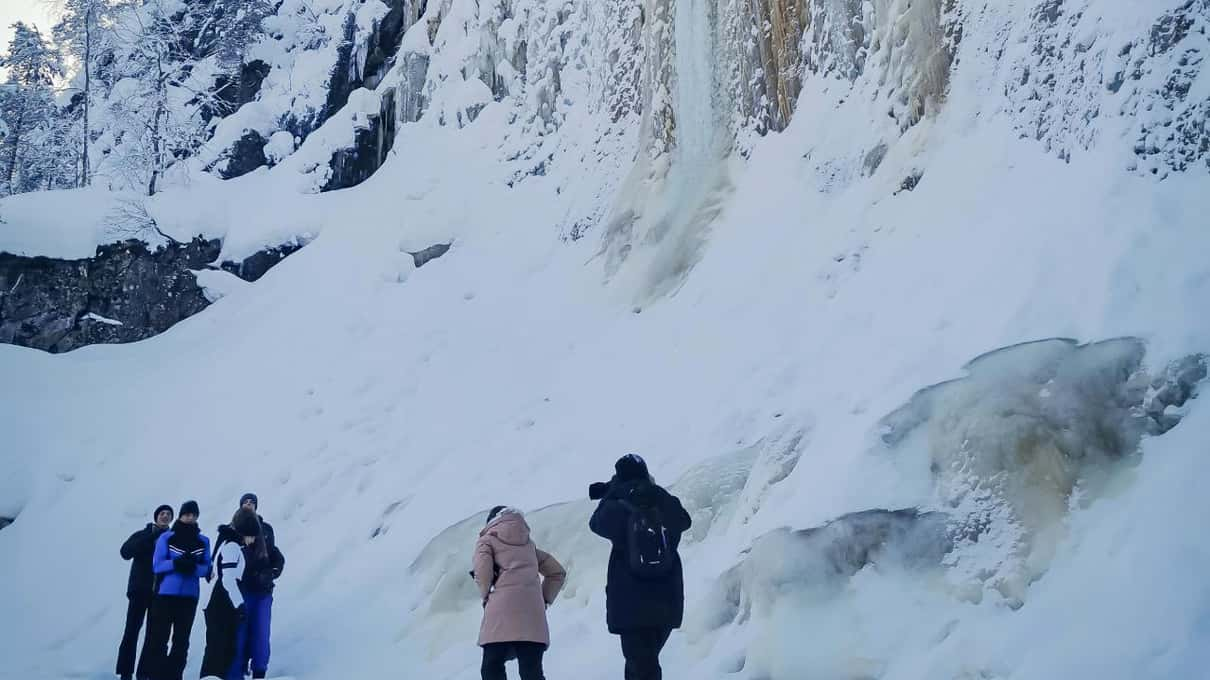
Wild about Lapland lends professional winter clothing and boots on its 7-hour day for groups of up to 8. Bring a base layer and gloves, and the rest is covered.
Beyond Arctic lends a similar set and adds a backpack. With Arctic GM at ~$89 you get thermal overalls, so your own warm boots matter most.
On ToTheNorth you bring everything except the grips. If you are buying winter gear for the trip, compare that cost with the price gap on our page on what each tour costs.
Spikes and other small kit
All four tours lend spikes or crampon-style grips that strap over your boots. They only work on soles with some tread, another reason to wear proper winter boots.
Cold drains phone batteries fast. Keep your phone in an inside pocket close to your body, carry a small power bank, and expect the screen to ignore thick gloves. The same kit works for an aurora hunt that evening.
A thermos of your own is fine, but every tour serves hot drinks at the campfire. A small bottle of water and a snack bar in a pocket are more useful on the walk.
A short packing list
- Base layer and middle layer, no cotton
- Warm jacket and snow pants, if the tour lends no clothing
- Thin gloves plus mittens or thick gloves
- Hat and neck warmer, plus sunglasses
- Warm boots with tread and wool socks, plus a spare pair
- Power bank plus water and a snack
- A small backpack, unless you go with Beyond Arctic
Packing for children takes more thought, since lent clothing may not come in small sizes. The guide to Korouoma with kids covers that, and the page on the frozen falls shows what all the layers are for.