Korouoma's ice by day, Lapland auroras by night
A Korouoma tour ends in the late afternoon, and Lapland winter evenings are long and dark. That makes it tempting to chase the northern lights on the same day. Below, how the two fit together, what a double day costs you in sleep and warmth, and when to keep them apart.
How the day is shaped
A Korouoma tour fills the daylight hours. Tours leave Rovaniemi in the morning, and Wild about Lapland's listing puts the drop-off back in town in the late afternoon, after a day of about 7 hours.
Most of that time goes on two drives of about 1.5 hours and a few hours on the trail. You come home tired and cold, but with the whole evening still ahead of you.
That free evening is what makes the pairing tempting. Northern lights tours from Rovaniemi run after dark, so on paper the two fit into one long day.
No tour on this site combines the waterfalls with an aurora hunt. The Korouoma trips run in daylight, and any northern lights outing is a separate booking.
When auroras show over Lapland
The aurora season in Lapland runs roughly from late August to early April, whenever the sky is dark enough. That window covers the whole frozen-waterfall season.
Seeing a display needs solar activity and a clear sky at the same moment. Neither can be booked, and no tour can promise one, however good its guide.
Rovaniemi sits on the Arctic Circle and has no full polar night. Even so, midwinter light fades early in the afternoon, which leaves long evenings for watching the sky, cloud permitting.
The case for one long day
If your stay is short, stacking both makes sense. You keep another day free for other plans around Rovaniemi, and you get two of the region's big winter sights in a single date.
Arctic GM keeps this easy on the budget. Its hike and BBQ from ~$89 is the lowest price of the four, often shown lower, which leaves room for an evening tour on top. It holds 4.9 from 1,600+ reviews on GetYourGuide.
The overalls Arctic GM lends also go over your own clothes, which keeps your layers drier for the night ahead. Pickup from your accommodation is an option when you book.
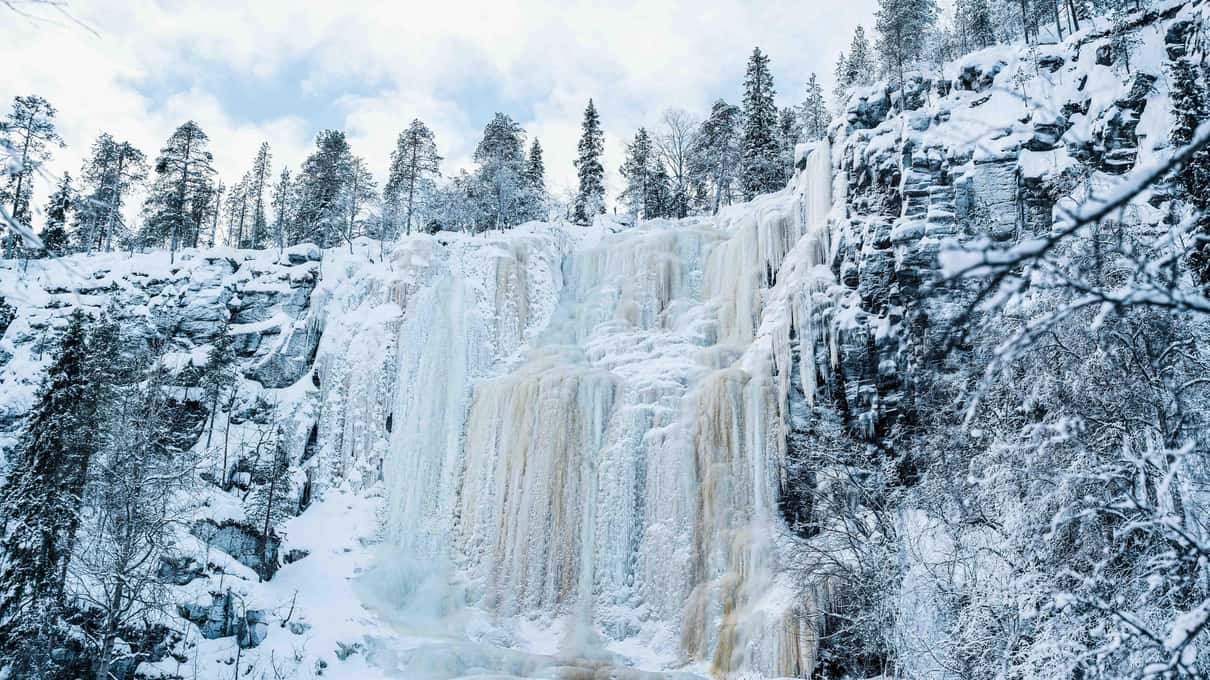
A daytime canyon trip that leaves room for the evening
Arctic GM's 7-hour hike with a campfire BBQ and thermal overalls lent, at the lowest price of the four. A small-group option for at most 8 sits on the same listing.
The case against it
A Korouoma day is longer and colder than it looks. You hike about 5 km over steep icy climbs, then stand at the falls in temperatures often below −10 °C (14 °F).
Add about 3 hours in a van and most people come back drained. An aurora tour then means more hours outdoors at night, often in deeper cold than during the day.
If your trip allows, put the two on separate days. A rest between them also gives you a second chance to pick a clear night from the forecast.
Getting through a double day
The gap between the drop-off and an evening pickup is your recovery time. Use it to eat a proper hot meal, since the campfire food on the canyon trips is a snack-sized lunch rather than dinner.
Change out of anything damp before you head out again. A base layer soaked on the final climb loses its warmth fast once you stand still under a night sky, and dry socks make more difference than an extra jacket.
Charge your phone and camera batteries in the afternoon too. Cold drains them quickly at the falls, and a dead battery at the moment the sky turns green is a common regret.
Try to sleep longer the night before. A hike with steep icy climbs followed by a late return from the aurora makes for a short night, and the next morning will feel it.
A simple plan for three days
With three days in Rovaniemi, one easy pattern is to keep the first evening free for an aurora tour if the forecast looks clear. Book the canyon for the second or third day, when the weather looks settled.
That way a cloudy first night still leaves two more chances, and the hike does not collide with your best aurora window. If both line up on one date, you can still stack them.
Planning a few days in Rovaniemi
With three or more nights, book the canyon on a day with a settled forecast and keep the aurora nights flexible. Cloud cover decides an aurora night. Watch the forecast and book late where availability allows.
Every Korouoma tour here cancels free until 24 hours before, and GetYourGuide will hold a seat without upfront payment. Swapping the hike day for a clear night is easy as a result.
The guide on when the falls are frozen helps you pick the week. January and February bring the surest ice and long dark evenings. March then adds daylight and milder nights before the aurora season ends.
Which tour suits an aurora week
On a double day, comfort counts. Wild about Lapland at ~$163 and Beyond Arctic at ~$163 lend boots along with warm clothing, which spares your own layers the sweat of the climb before a night outside.
ToTheNorth, at ~$146, lends snow grips but no clothing, so you rely on your own kit for both outings. Our guide on what to wear covers layering for a long cold day.
Group size matters less for the aurora than for the canyon, where space at the viewpoints is tight. The small-group guide and the cost guide help you pick the daytime half, and the self-drive guide covers going without a tour.